Research
When Trees Talk

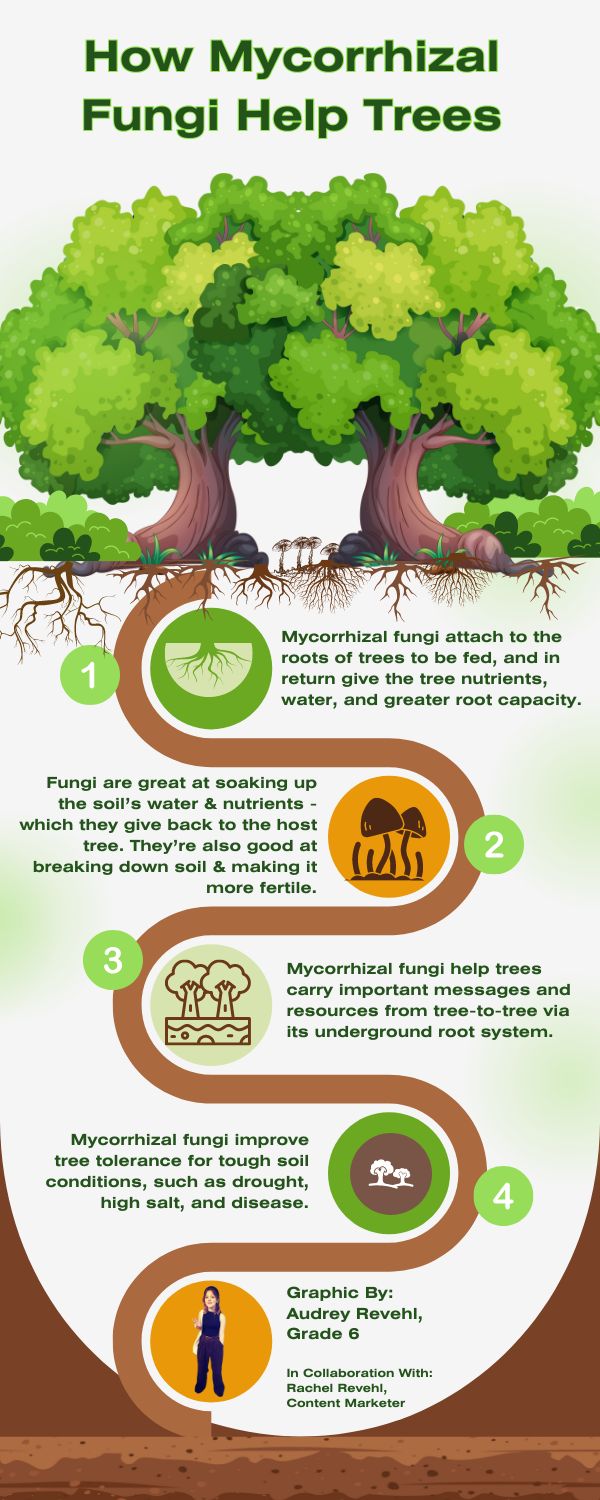
Trees talk to each other through a system of chemical signals and weak electro-chemical impulses - both above ground in the air and underneath through mycorrhizal networks.
Trees don't have pain receptors, nerves, or a brain - so they don't "feel" pain the same way we do. Still, they have many receptors in their bark, leaves, and root systems that help them to "know" there is a threat.
When trees are under attack by insects and pathogens, they release chemical or electro-chemical signals through the roots, and then use the fungi to "broadcast" the message to other trees nearby. This alerts all connected trees in the area that they need to put up their defenses.
Trees can also use these underground networks to ask other trees for help or deliver resources when neighboring trees are in need.
This system mutually benefits all the connected trees and plants, as well as the fungi. This is what we call a symbiotic relationship.
Cracking the Code and Making a Difference
Just like people, trees need their friends to get by in this world. When we learn how they talk, we can better learn how to help them. And that's important because humans need trees to survive.
However remember that our only knowledge of tree communication is constantly and still developing. With many places with trees and different kinds of electrical and fungal networks, scientists' are continuously exploring and developing this fascinating phenomenon. What we learn may help us not only in farming, but in efforts for reforestation and controlling climate change.